Beets Boost Brain Health
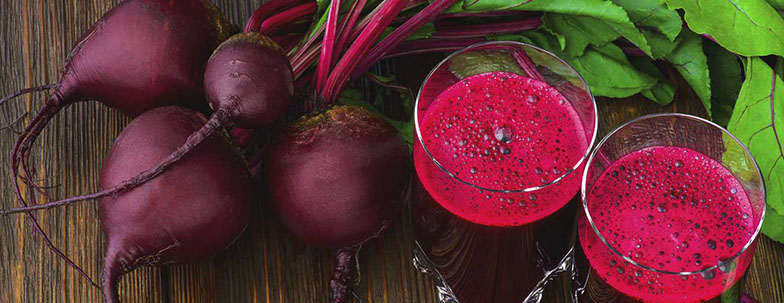
Beets Give Your Brain a Powerful Boost
In the featured study, 26 middle-aged men and women diagnosed with high blood pressure were given either beet juice or a placebo to drink three times a week, an hour before exercise, for six weeks.Exercise consisted of a 50-minute walk on a treadmill.
As demonstrated in other studies, the beet juice increased tissue oxygenation and blood flow in the treatment group. It also improved brain neuroplasticity by improving oxygenation of the somatomotor cortex, a brain area that is often affected in the early stages of dementia. As noted by study co-author W. Jack Rejeski, a health and exercise science professor at Wake Forest University in North Carolin.
Raw Beets Boost Heart and Cardiovascular Health Too
Raw beets have been shown to have a very potent impact on your cardiovascular health, lowering blood pressure by an average of four to five points in just a few hours.
Some studies have shown a glass of beet juice can lower systolic blood pressure by more than eight points, which is far more than some blood pressure medications! This effect is due to the naturally-occurring nitrates in beets, which are converted into nitric oxide in your body.
Nitric oxide is a soluble gas that's continually produced from the amino acid L-arginine, inside your cells. This gas plays an important role in supporting normal endothelial function and protecting your cells' powerhouses, the mitochondria. It is also a potent vasodilator.
By relaxing and dilating your blood vessels, nitric oxide improves blood flow and lowers blood pressure. In conventional medicine, nitrates are used to treat angina and congestive heart failure, and research shows a glass of beetroot juice has the same effect as prescription nitrates.10
In another study, nine patients diagnosed with heart failure who experienced loss of muscle strength and reduced ability to exercise were found to benefit from beet juice. The patients were given 140 milliliters (mL) about two thirds of a cup of concentrated beet juice, followed by testing, which found an almost instantaneous increase in their muscle capacity by an average of 13 percent.
More About Nitric Oxide
Nitrous oxide, commonly known as laughing gas or sweet air, is a chemical compound with the formula N2O. It is used in surgery and dentistry for its anesthetic and analgesic effects. It is known as "laughing gas" due to the euphoric effects of inhaling it. Nitric Oxide15 (NO) is a gas that serves as a signaling or messenger molecule in every cell of your body. Hence, it's involved in a wide variety of physiological and pathological processes.
It causes arteries and bronchioles to expand, allows brain cells to communicate with each other, and causes immune cells to kill bacteria and cancer cells. Low levels of nitric oxide production are important in protecting an organ such as the liver from ischemic damage.
Another problem is the presence of fluoride. When fluoride is present, it converts nitric oxide into the toxic and destructive nitric acid. As noted in "Pharmacology for Anesthetists 3, "Nitric oxide will react with fluorine, chlorine and bromine to form the XNO species, known as the nitrosyl halides, such as nitrosyl chloride. Nitrosyl iodide can also form but is an extremely short-lived species."
One way to increase nitric oxide production is to do a series of calisthenic exercises. There are many that can be used, but I typically do a modified version of one developed by Dr. Zach Bush, whom I recently interviewed. I did a short video to illustrate the workout. It takes about three to four minutes and is typically done three times a day and every day, but must be at least two hours between sessions.
Other Health Promoting Properties of Beets
The phytonutrients that give beets their deep crimson color also have powerful anti-cancer properties. Research has shown that beetroot extract reduced multi-organ tumor formations in various animal models when administered in drinking water. Beetroot extract is also being studied for use in treating human pancreatic, breast and prostate cancers.17
Raw beets also help boost immune function thanks to high vitamin C, fiber, potassium and manganese, while the betalin pigments and sulfur-containing amino acids in beets support your body's Phase 2 detoxification process. Traditionally, beets have been valued for their ability to purify your blood and liver.
High in the B vitamin folate, beets may also lower your stroke risk and are an excellent food for pregnant women. Folate is essential for many bodily processes, and lack of folate during pregnancy raises the risk of birth defects. The blood-cleansing properties of beet kvass may also help alleviate morning sickness.
Considerations When Buying and Preparing Beets
Whether you're juicing your beets, eating them raw or fermenting them, I strongly recommend buying organic beets, or growing your own from heirloom beet seeds. While table beets are not genetically engineered (GE), they're frequently grown in close proximity to sugar beets, most of which are GE, so there's the potential for contamination via cross-pollination.
Besides the beetroots, beet greens are also very nutritious, and are a great source of fiber — 17 percent of your daily requirements in just one cup. Beet greens also contain vitamins B6 and K, magnesium, potassium, iron, copper, manganese and valuable antioxidants. You can juice or sauté them, or simply add them to your salad.
Beetroots tend to have a foul-tasting skin, so you may want to peel your beets before using them. One exception is when you're making beet kvass. In this case, it's better to leave the peel on, as beneficial microbes benefit and thrive from it. Hence you get better fermentation if you leave the skin on.